
How to Clear Overgrown Land With a Tow-Behind Brush Cutter
Aug 11th 2026
Land can become overgrown faster than most property owners expect. Tall grass takes over an unused field. Brush closes in around trails and fence lines. Small saplings begin growing where open pasture used to be.
The good news? Reclaiming that ground may not require a tractor-mounted cutter or a full land-clearing crew.
For overgrown grass, dense brush, and manageable saplings, a heavy-duty tow-behind brush cutter can help reopen neglected areas and make ongoing property maintenance much easier.
Start by Identifying What You Need to Clear
Before choosing equipment, walk the property and look closely at the type of growth you are dealing with.
A tow-behind brush mower may be a practical choice for:
- Overgrown fields and pastures
- Tall grass and weeds
- Thick brush
- Small saplings
- Hunting property
- Fence lines
- Farm lanes and trails
- Areas that are difficult to reach with a larger tractor
Large trees, stumps, heavy fallen timber, and substantial overhanging limbs usually require different equipment. Knowing what is growing on the property helps you choose the right tool and avoid asking one machine to do a job it was not designed to handle.
How a Tow-Behind Brush Cutter Helps Reclaim Land
Unlike an ordinary finish mower, a heavy-duty brush cutter is designed for rougher vegetation and uneven rural ground.
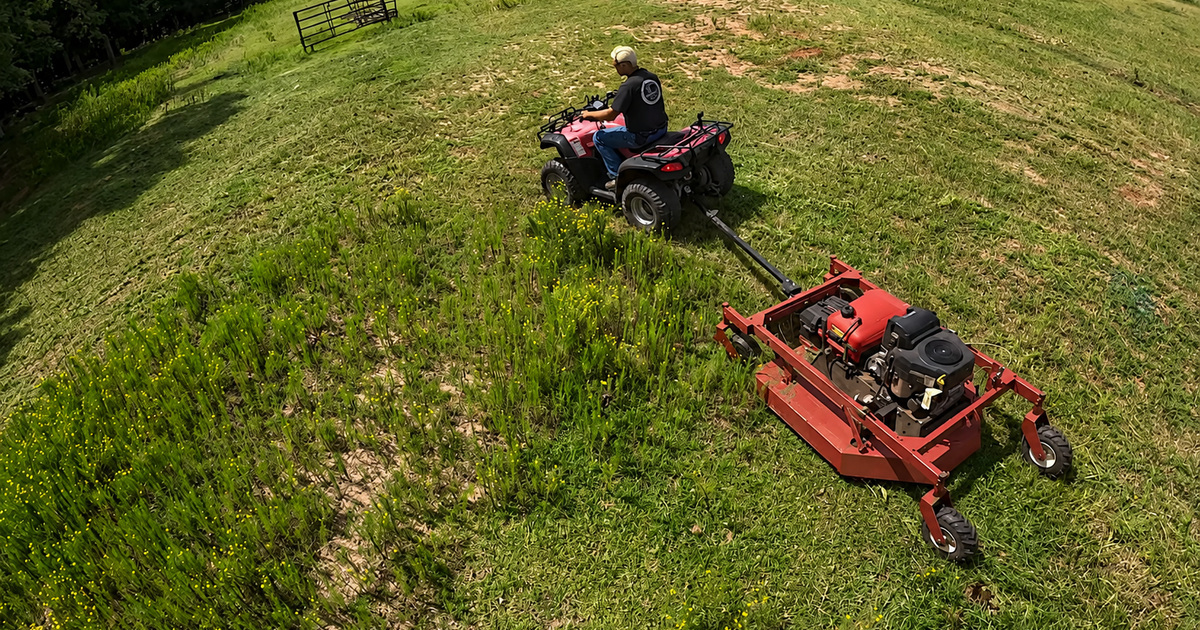
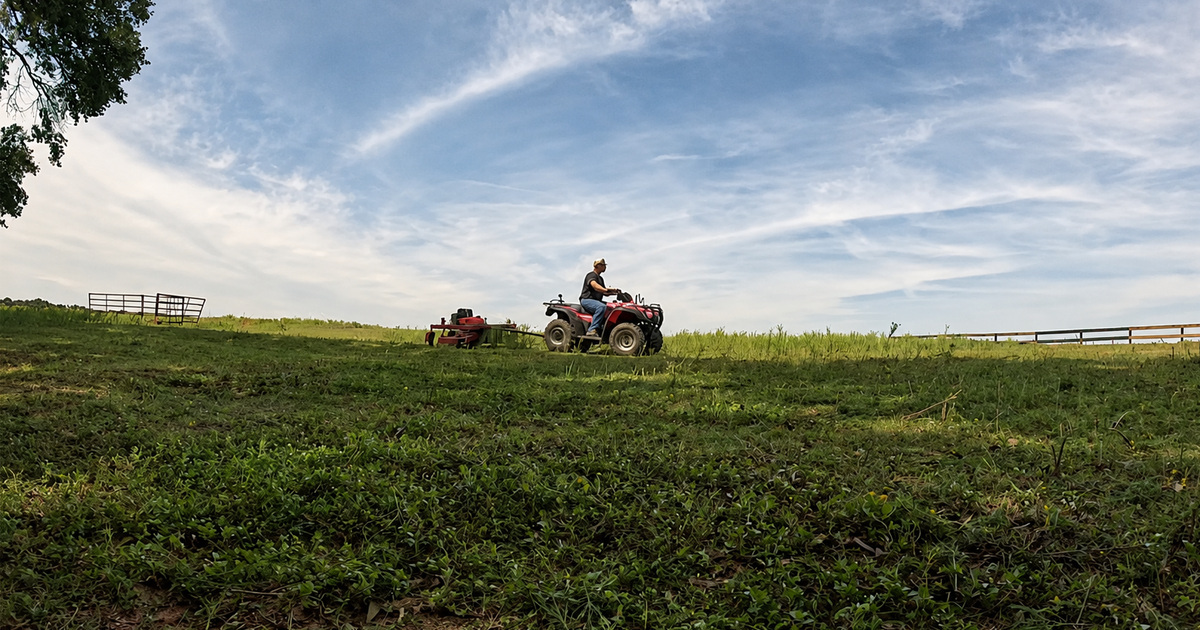
A self-powered tow-behind model carries its own engine and cutting system. This allows a suitable ATV or other approved tow vehicle to pull the mower through areas where a traditional lawn mower would struggle.
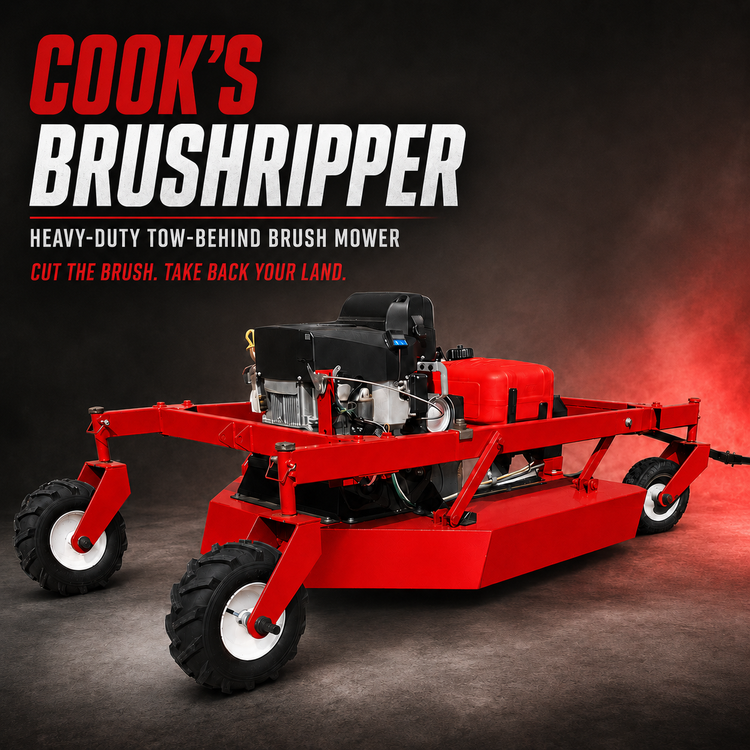
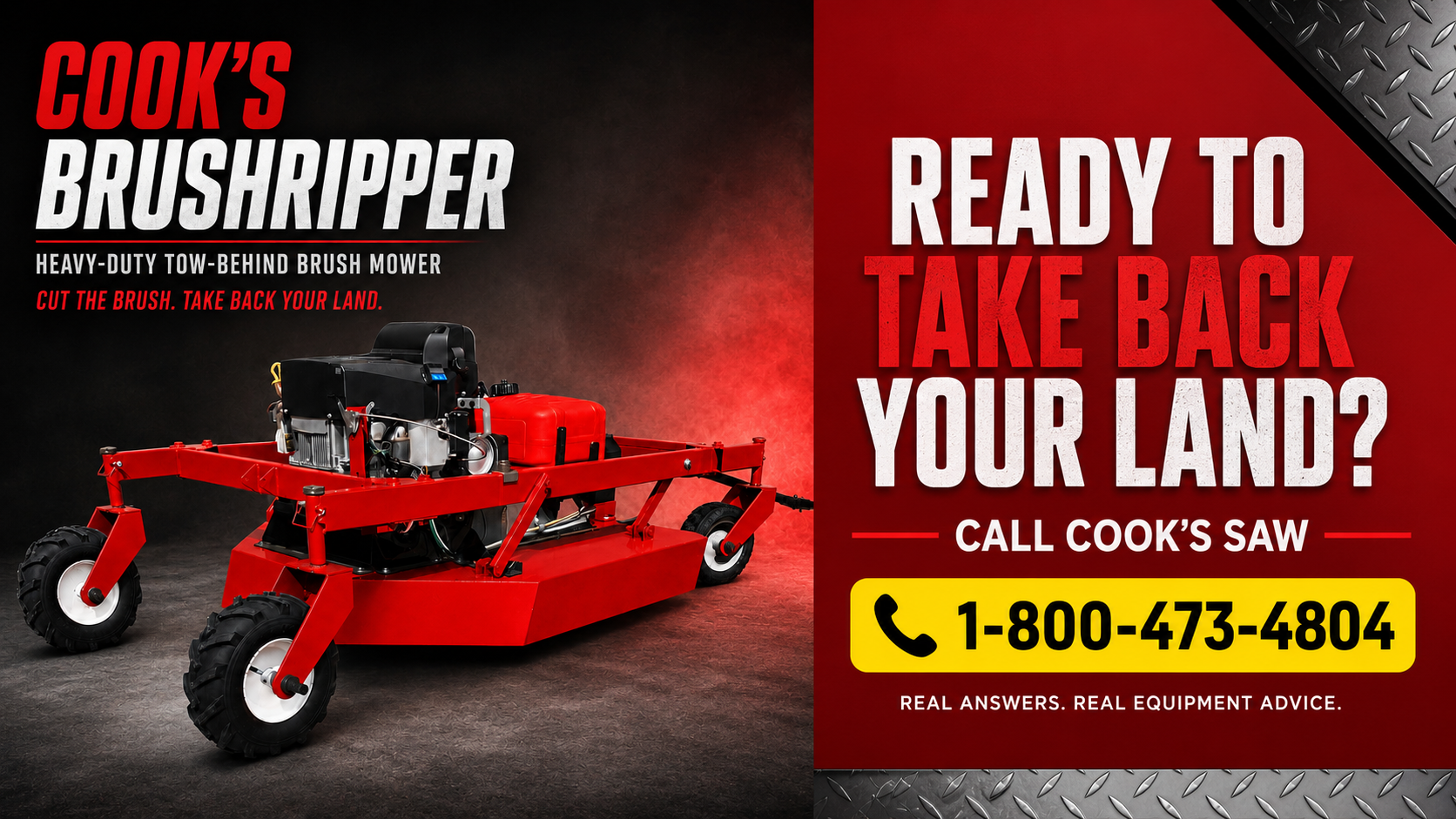
The Cook’s BrushRipper 44, for example, is powered by a 21 HP Kohler engine. Its twin swinging blades provide a 44-inch cutting width for mowing pastures, opening trails, and cutting through heavier growth.
The BrushRipper 44 is rated to handle:
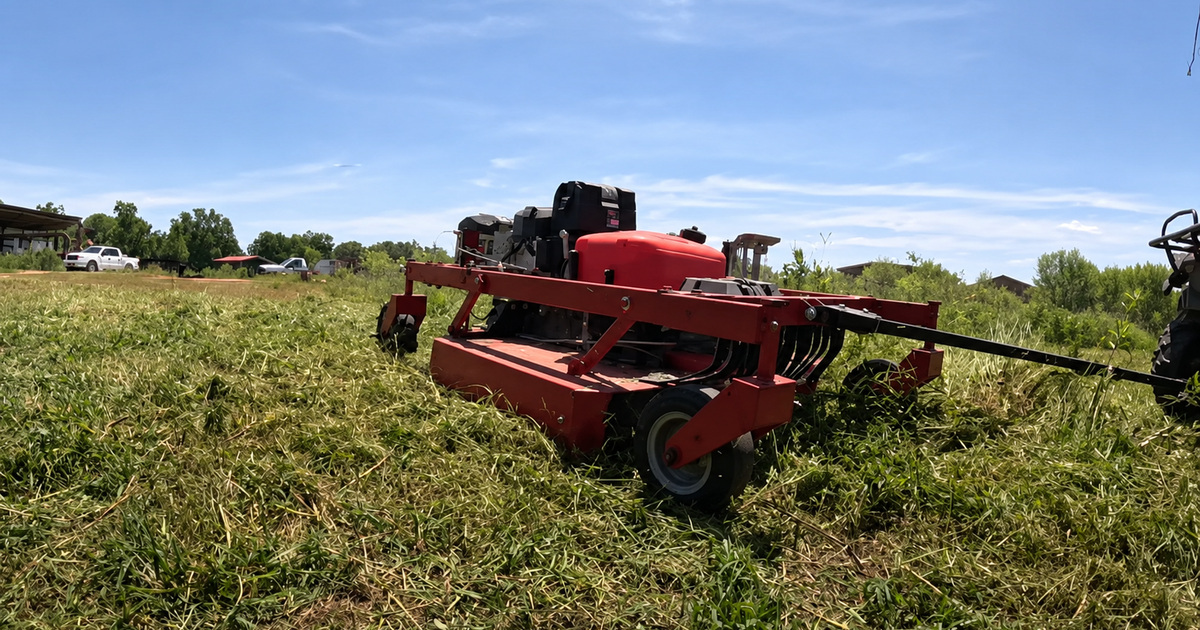
- Grass up to 6 feet tall
- Brush up to 8 feet tall
- Saplings up to 3 inches in diameter
- Cutting heights from 3 to 8 inches
Actual cutting conditions will vary with the density of the growth, terrain, moisture, towing vehicle, and how quickly the operator moves through the area.
A Step-by-Step Plan for Clearing an Overgrown Field
A little planning can make a difficult-looking property much more manageable.
1. Walk and Inspect the Area
Before mowing, look for rocks, wire, old fencing, holes, stumps, fallen limbs, drop-offs, and other hidden obstacles.
Mark anything that cannot be safely removed. Never assume tall grass is covering only soft vegetation.
Keep people and animals well away from the work area, and follow the equipment manufacturer’s operating and safety instructions.
2. Confirm Your Towing Setup
Make sure the tow vehicle, hitch, and terrain are appropriate for the mower.
Consider the weight of the equipment, slope of the property, traction, turning space, and stopping ability. If you are uncertain, contact Cook’s Saw before operating the BrushRipper to discuss towing requirements.
3. Begin With a Higher Cutting Position
When clearing unfamiliar ground, starting at a higher cutting height can provide more clearance over uneven terrain and hidden obstacles.
The BrushRipper’s cutting height adjusts from 3 to 8 inches. Once the first pass reveals the condition of the ground, the height can be adjusted for the desired result.
4. Open a Working Path
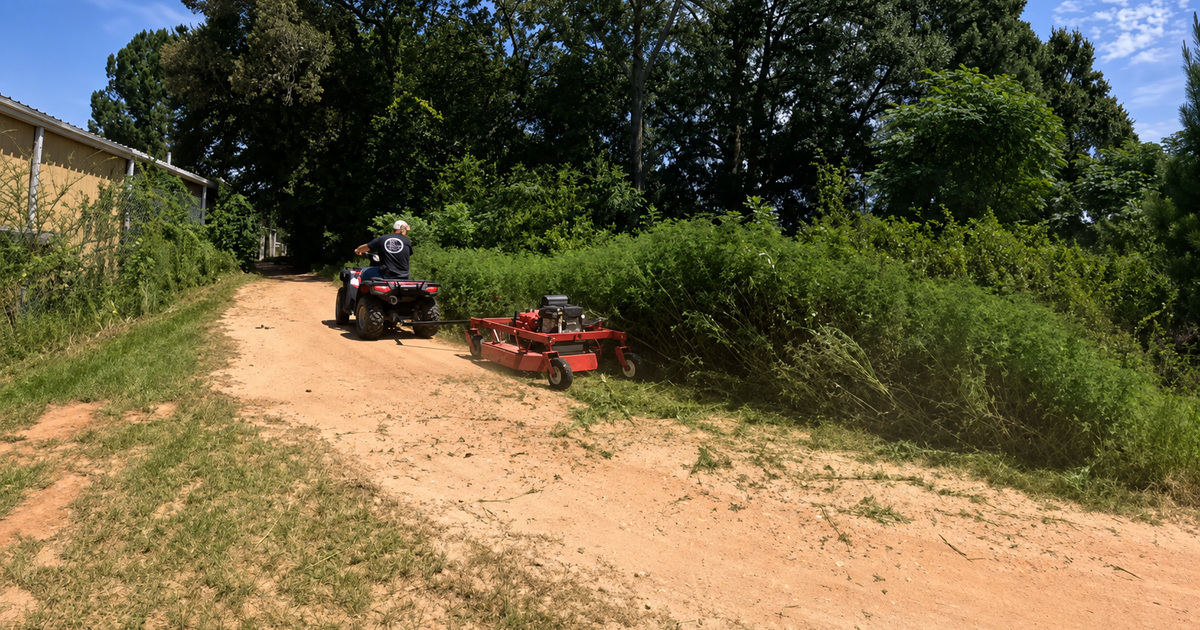
Begin along an accessible edge or existing lane. Establish enough room to turn safely before working farther into the overgrowth.
For dense areas, take controlled passes instead of trying to force the mower through everything at once. Slowing down gives the blades more time to process heavy vegetation.
5. Work in Sections
Divide a large property into smaller areas. This makes it easier to inspect the ground, monitor the equipment, and see your progress.
Multiple passes may be necessary where brush is especially thick. The goal is steady, controlled clearing, not rushing through unknown terrain.
6. Maintain the Reclaimed Ground
The first clearing is usually the hardest. Once the heavy growth is under control, regular mowing can help keep brush and saplings from becoming established again.
How often the property needs to be cut will depend on the growing season, rainfall, vegetation, and how the land is being used.
Why the BrushRipper 44 Works for Rural Property
The Cook’s BrushRipper 44 is built for property owners who need more cutting capacity than an ordinary mower can provide.
Its land-maintenance features include:
- 21 HP Kohler engine
- 44-inch cutting width
- Twin swinging blades
- Adjustable cutting height from 3 to 8 inches
- Electric blade clutch
- Six-gallon fuel capacity
- Stable four-wheel stance
- Lugged rear tires for rough terrain
- Heavy-duty steel construction
The combination of its own power source and tow-behind design makes it useful for reclaiming fields, maintaining pastures, reopening trails, and cutting around rural property.
Visit the BrushRipper 44 product page to watch the demonstration, review the complete specifications, and learn more about current availability.
Is a Tow-Behind Brush Cutter Right for Every Clearing Job?
A tow-behind brush cutter is a strong option when the primary job is cutting tall grass, brush, and smaller saplings close to the ground.
It may not be the complete solution when the property includes:
- Large standing trees
- Heavy limbs over roads or trails
- Thick woody growth above mower height
- Stumps that need to be removed
- Large piles of logs or cut brush
- Terrain that is unsafe for the towing vehicle
Some properties need more than one type of land-clearing equipment. A brush mower can open the ground level first, while skid steer attachments can handle heavier material, elevated limbs, or cleanup work.
When to Consider Skid Steer Attachments
If your clearing project includes thick woody growth or overhanging tree limbs, the Cook’s TrailBlazer skid steer attachment provides another option.
Its rotating cutting arm and three 28-inch saw blades are designed to clear dense brush and trim limbs along trails, pasture edges, driveways, and fence lines. Cook’s also offers heavy-duty grapples for moving brush, logs, and other cleared material.
For larger land-reclamation projects, combining the right ground-level mower with the appropriate skid steer attachments can help move the job from cutting to cleanup more efficiently.
Explore Cook’s skid steer attachments to compare solutions for brush clearing, limb cutting, and material handling.
Frequently Asked Questions
Can a tow-behind brush cutter cut saplings?
That depends on the rated capacity of the mower. The Cook’s BrushRipper 44 is designed to cut saplings up to 3 inches in diameter under suitable operating conditions.
Can the BrushRipper 44 be pulled behind an ATV?
The BrushRipper is shown operating behind an ATV, but the towing vehicle must be suitable for the mower’s weight, terrain, and operating conditions. Contact Cook’s Saw to confirm towing requirements for your specific vehicle.
What is the difference between a brush cutter and a finish mower?
A finish mower is intended to produce a smoother cut on maintained grass. A brush cutter is built for taller, denser vegetation and rougher property-maintenance work.
Will a brush cutter remove trees and stumps?
A brush cutter can handle vegetation within its rated cutting capacity, but it is not intended to remove large trees or dig out stumps. Those jobs require different land-clearing equipment.
Take Back Your Land One Section at a Time
Overgrown property can look overwhelming, but the job becomes more manageable when you match the equipment to the vegetation and work through the land in controlled sections.
For pastures, fields, trails, and smaller saplings, the Cook’s BrushRipper 44 provides a heavy-duty tow-behind solution.
If the project also includes dense woody growth, elevated limbs, or material that needs to be moved, take a look at Cook’s skid steer attachments to build a more complete land-clearing setup.
Questions about which equipment fits your property? Call Cook’s Saw at 1-800-473-4804.