

Sawmill Roller Guides & Grind Rocks
Aug 6th 2026
Small Parts That Help Protect Every Cut
A sharp bandsaw blade matters, but it is only one part of a good cut. The blade also needs steady support as it moves through the log, and its tooth profile needs careful maintenance when it is time to sharpen.
That is where two often-overlooked sawmill parts come into play: roller guides and grind rocks.
Roller guides help stabilize and track the bandsaw blade during operation. Grind rocks remove metal during sharpening and help restore the working profile of the blade teeth. Each serves a different purpose, but both can affect cutting accuracy, blade performance, and the amount of time you spend troubleshooting instead of sawing.
Understanding what these parts do and checking them before they become a problem can help keep your portable sawmill ready for the next log.
What Do Sawmill Roller Guides Do?
Sawmill roller guides help control the blade between the band wheels and the log. A properly functioning guide system supports the blade, reduces unwanted movement, and helps it remain aligned with the mill bed during the cut.
This support becomes especially important as the blade meets knots, changes in grain, or other demanding conditions inside a log. The blade still must be sharp, correctly tensioned, and properly set up, but sound roller guides give it a more stable path to follow.
When guides are worn, damaged, out of round, or incorrectly adjusted, a sawyer may notice:
-
Wavy or inconsistent lumber
-
Increased blade vibration
-
A blade that moves up and down during the cut
-
Tracking problems
-
Unusual noise or heat near the guides
-
Bearings that feel rough, loose, or difficult to turn
-
Premature blade wear or breakage
These symptoms can have more than one cause, so roller guides should be considered as part of the complete sawmill setup not treated as the automatic answer to every cutting problem.
Cook’s roller guides are case-hardened and precision-ground for long life and smooth operation. Standard and Mega guide options are available, along with replacement bearings, bushings, guide assemblies, and retrofit components for different blade sizes and sawmill applications.
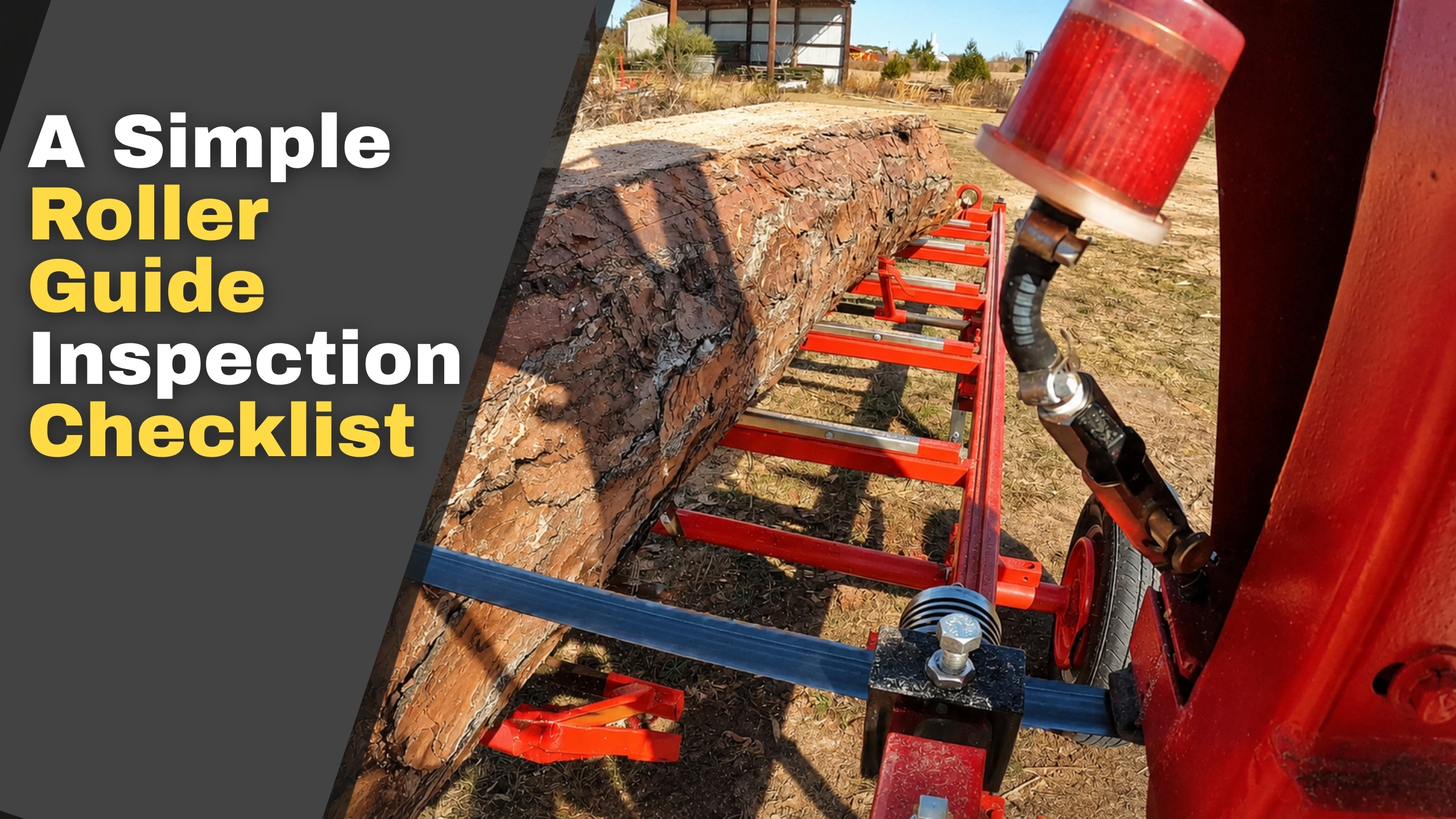
A Simple Roller Guide Inspection Checklist
Roller guide maintenance does not need to be complicated. A quick inspection can help you catch obvious wear before it affects a full day of sawing.
Before operating the mill:
-
Make sure each roller turns freely.
-
Check for flat spots, grooves, chips, or uneven wear.
-
Look for loose bearings, bushings, bolts, or mounting components.
-
Confirm the guides are clean and correctly positioned.
-
Check blade alignment and down pressure according to the mill and guide-system instructions.
-
Lubricate greaseable bearings on the recommended schedule.
Cook’s guide-maintenance recommendations emphasize regular lubrication for greaseable roller guides. Heat, moisture, and contaminants can shorten bearing life when lubrication is neglected. If a bearing locks up, the blade can rub against one area of the roller and quickly create a damaging flat spot.
Always stop the mill and follow the manufacturer’s safety and adjustment procedures before inspecting, lubricating, or replacing guide components.
What Does a Grind Rock Do?
A grind rock is the abrasive wheel used by a bandsaw blade sharpener to remove metal from the blade tooth. Its job is not simply to make the tooth feel sharp. The rock must follow the intended tooth and gullet profile while removing the right amount of material.
That balance matters. Grinding too aggressively can create excess heat, leave a heavy burr, or add stress in the gullet area. Grinding too lightly or using a rock that no longer holds the needed shape may leave the tooth profile incomplete.
Cook’s advises grinding as lightly as possible so the grit cuts the steel instead of generating unnecessary heat. The right grind rock depends partly on the sharpener, blade, stock-removal needs, and the operator’s grinding technique.
Choosing Between Black, Ruby, and Blue Grind Rocks
Cook’s offers several premium grind rock options. The main difference is how each abrasive and bond behaves during sharpening.
Black Grind Rocks
Black grind rocks use aluminum oxide grit with a tight bond. They are intended for medium-to-heavy stock removal and may suit operators who need a more aggressive grinding action.
Ruby Grind Rocks
Ruby rocks use premium abrasive material with a more porous bond. Cook’s offers ruby options for medium or medium-to-heavy stock removal, depending on the specific rock.
Blue Grind Rocks
Blue ceramic grind rocks are intended for medium-to-light stock removal. They generally require only light, infrequent reshaping and are Cook’s most popular grind-rock option.
There is no single best rock for every sawyer. The better choice is the rock that matches your sharpener, blade-maintenance needs, and grinding method. If you are unsure, confirm compatibility before ordering.
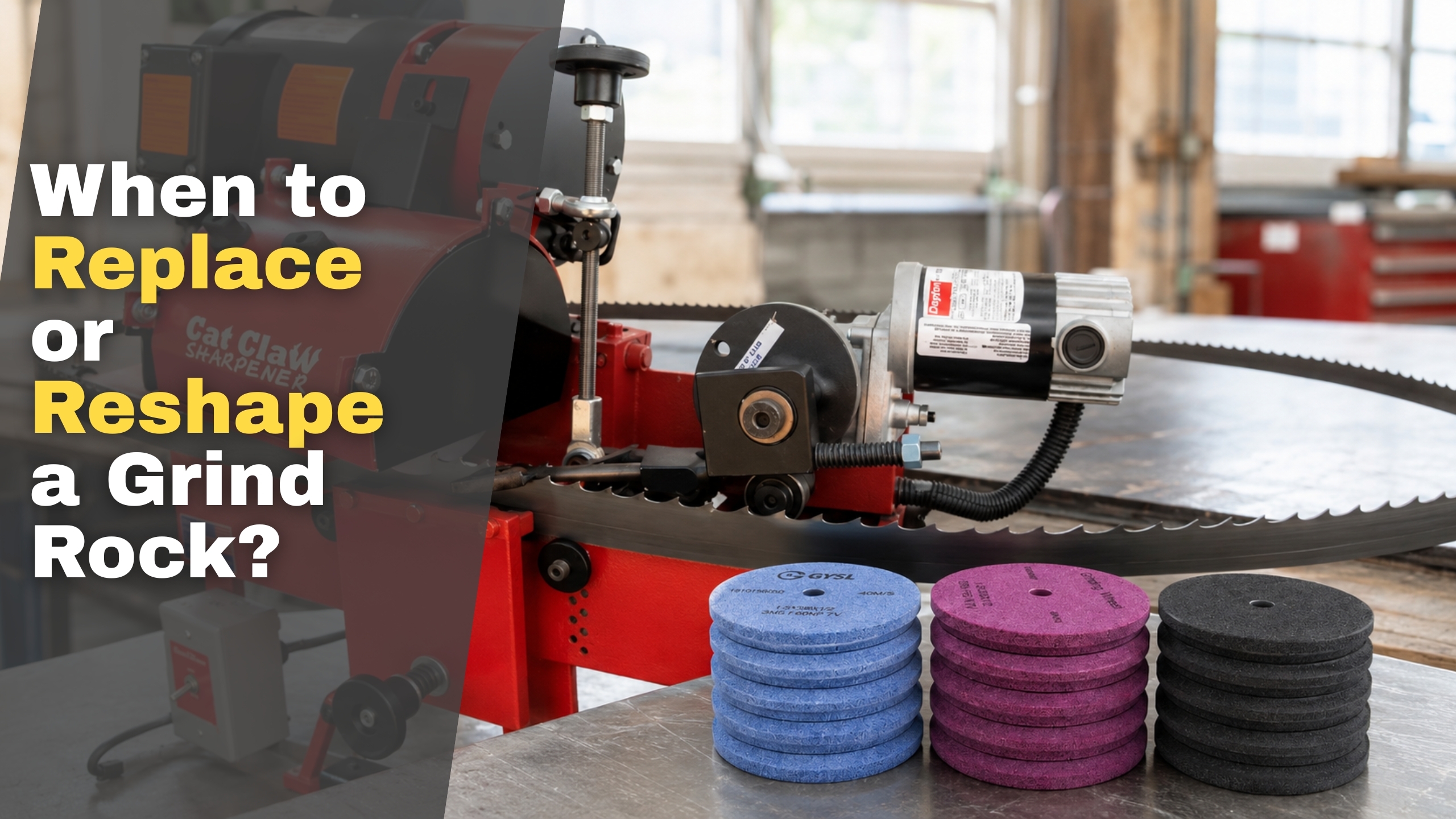
When Should You Replace or Reshape a Grind Rock?
Inspect the rock before each sharpening session. Stop and evaluate it if you notice:
-
A profile that no longer matches the blade tooth
-
Glazing or loading on the grinding surface
-
Excessive vibration during operation
-
Uneven contact with the tooth or gullet
-
Cracks, chips, or other visible damage
-
A change in sharpening quality or consistency
A grind rock may need to be reshaped as it wears. Blue ceramic rocks generally require less frequent shaping, while other rocks may need attention more often depending on technique and use.
Never operate a damaged grinding wheel. Always follow the sharpener and grinding-wheel safety instructions.
Better Cuts Begin With the Whole Blade System
If a mill starts producing wavy boards or blades begin wearing faster than expected, it is tempting to blame the blade alone. In reality, clean and accurate cutting depends on several connected factors:
-
A sharp blade with the correct tooth profile
-
Proper tooth set
-
Correct blade tension
-
Accurate band-wheel and guide alignment
-
Roller guides in good condition
-
Appropriate feed speed for the blade, mill, and log
Replacing a worn roller guide will not correct a dull blade. A new grind rock will not fix improper guide alignment.
The best results come from treating the blade, sharpener, guides, and mill setup as one working system.
Keep the Maintenance Parts You Need Within Reach
Small maintenance parts have a way of becoming important at the least convenient time. Keeping spare roller guides, bearings, and the grind rocks you use most can make routine service easier and help prevent an avoidable delay.
Cook’s Saw is currently offering free shipping on roller guides and grind rocks. If your inspection shows that it is time to replace a worn guide or restock your sharpening station, you can browse the available options below.
Shop Roller Guides:
https://cookssaw.com/parts/roller-guides/
Shop Grind Rocks:
https://cookssaw.com/sharpener-parts/grind-rocks/
Not sure which option fits your mill or sharpening system? Call Cook’s Saw at 1-800-473-4804. Our team can help you compare the available parts and find the right option for your equipment.